
 Image 1 of 3
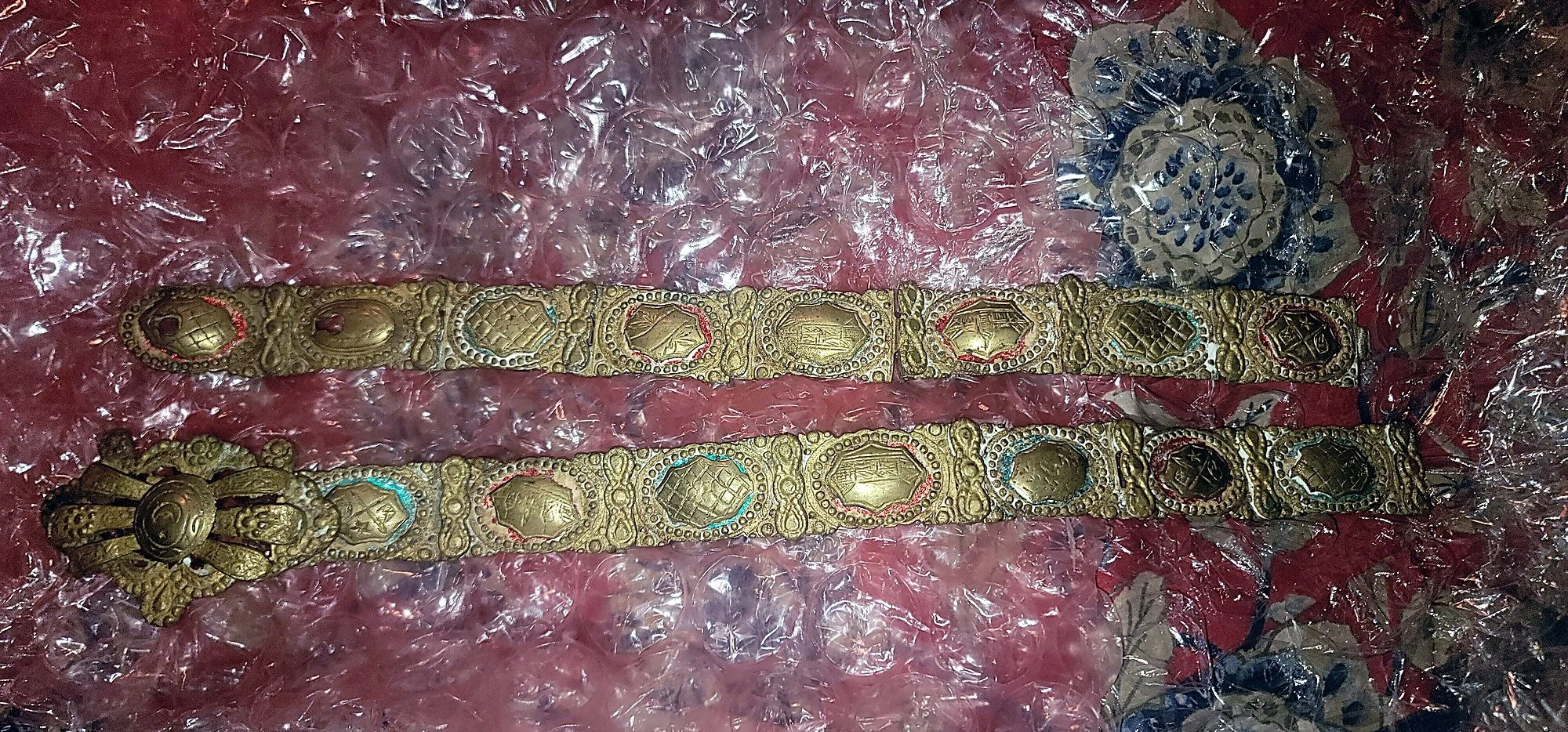 Image 2 of 3
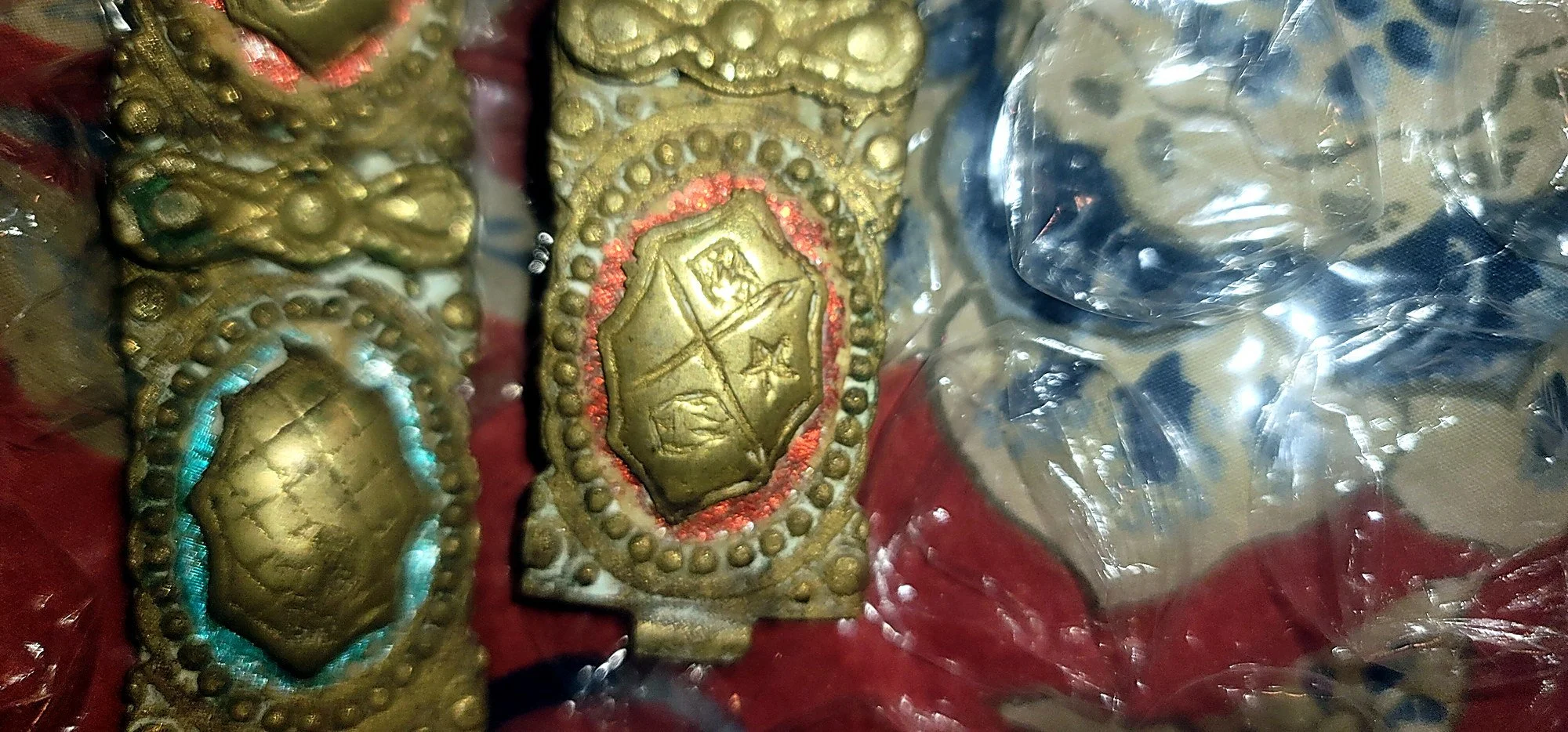 Image 3 of 3
Ceremonial Belt (Protective / Talismanic Adornment)
Ottoman Empire, provincial workshop (likely Balkan or Western Anatolia)
Mid to late 19th century
Cast and engraved brass with mineral pigment
This belt was made to do more than decorate. Its construction, materials, and symbols all point to an object created with protective and positive intention, likely for female ceremonial or bridal wear.
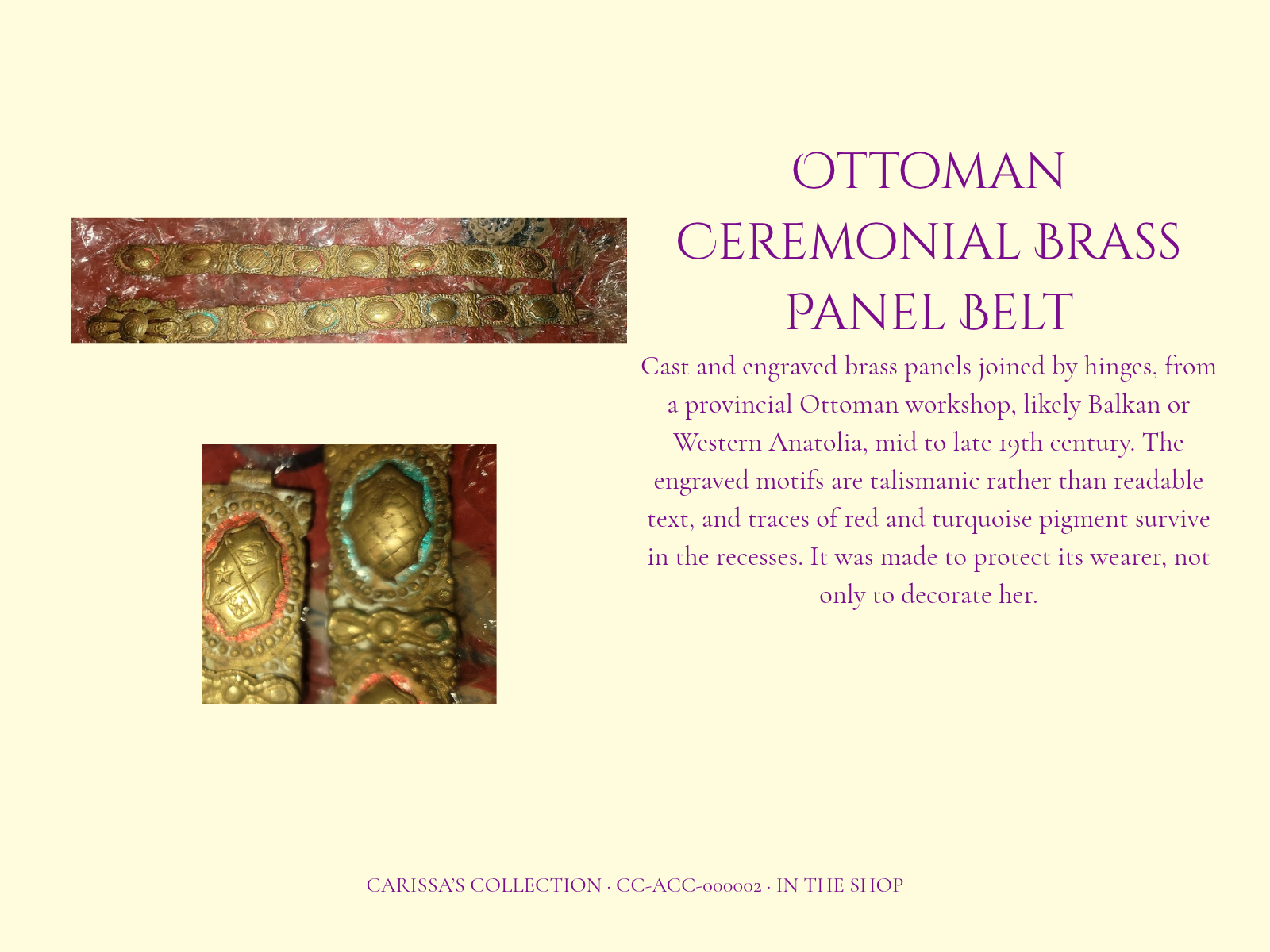
The belt is composed of individually cast brass panels joined by hinges, a construction method typical of 19th-century Ottoman provincial workshops. The backs retain rough casting texture and hand-set rivets, confirming hand production rather than later machine manufacture. Small variations from panel to panel further support this attribution.
Each panel features talismanic motifs rather than readable text. The engraved forms resemble script but do not resolve into Ottoman Turkish or Arabic, indicating pseudo-epigraphic symbolism, a common feature in folk metalwork meant to invoke protection rather than convey words. Crosshatched lattice patterns appear repeatedly; in Ottoman folk belief these functioned as symbolic "nets," intended to contain harm and guard the wearer. Divided fields and star motifs, visible on several panels, are associated with balance, guidance, and protection in all directions.
Traces of red and turquoise pigment remain embedded in the engraved recesses, seated in an aged binder visible as pale residue around the borders. Red is traditionally associated with vitality, fertility, and protection, while turquoise and green are strongly linked to warding the evil eye. The deliberate placement of pigment confirms that color was part of the belt's symbolic function, not later decoration.
The belt's large, boldly cast buckle, with layered floral elements and a central boss, reflects provincial Ottoman taste rather than refined court production. Integrated fastening holes within select plaques indicate original functional design rather than later alteration.
Taken together: hand casting, hinged construction, symbolic repetition, surviving pigment, and regional buckle form identify this belt as a ceremonial object created with the intention of protection, stability, and blessing. It was likely worn during important life transitions, carrying forward hopes for health, continuity, and good fortune.
This belt stands as an example of how adornment in the Ottoman world could function simultaneously as jewelry, cultural expression, and quiet magic made tangible.
Care note: do not polish this piece, scrub the white filler, or brighten the brass. Its surface is part of its history.
Archive ID: CC-ACC-000002